

The two-way door
Every market has an escrow that accepts real copies of the underlying and pays out tokens of equal value, and accepts tokens and pays out real copies. That door is what makes the rest work:- Token trades above the collectible’s value → depositing a copy pays more than the copy is worth elsewhere. Holders of the real thing feed copies in, take profit in tokens, and their selling presses the token back down toward fair value. The copies stay locked in escrow.
- Token trades below the collectible’s value → redeeming is cheap: you take a real copy out for less than it costs on a marketplace. Buying tokens to redeem presses the token back up.
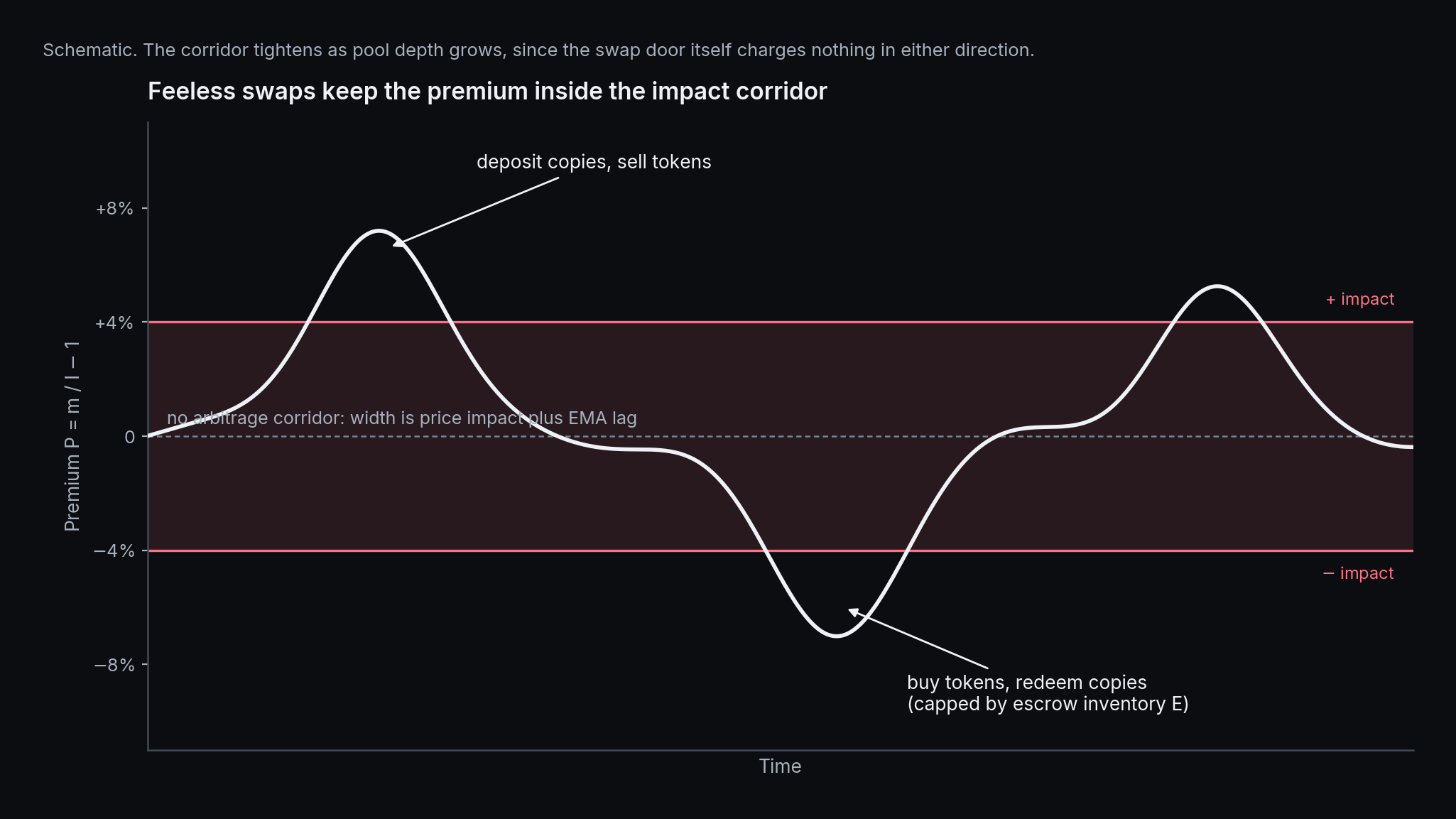
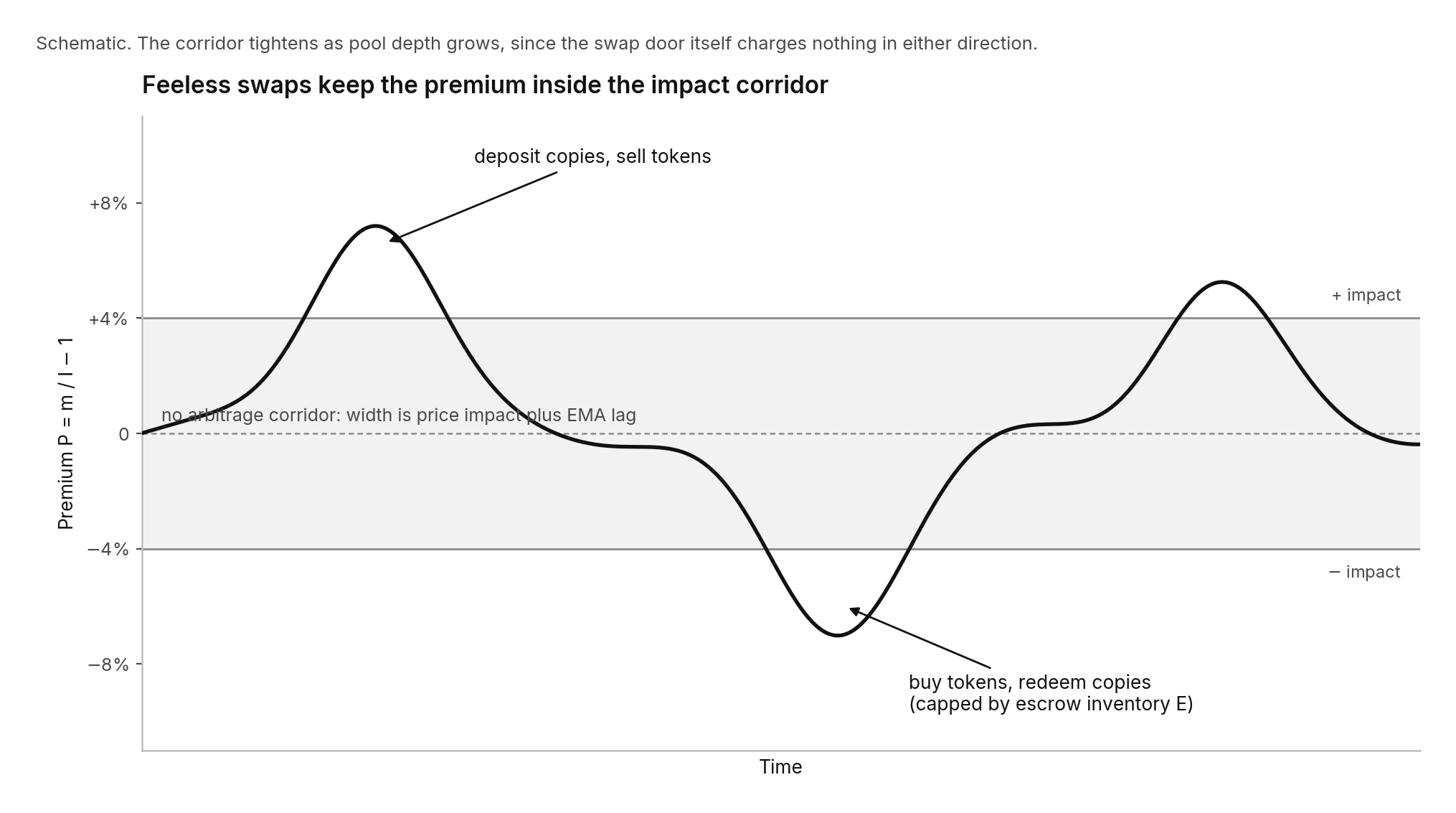
The no-arbitrage corridor: outside it, feeless item swaps pull the price back.
Why token demand reaches the individual collectible
Follow what a wave of token buying actually does:- The token’s price rises above the collectible’s index.
- Depositing copies becomes profitable, so copies flow into escrow.
- Every deposited copy leaves the collectible’s tradable float: one fewer Pikachu PSA 10 listed, one fewer floor NFT for sale.
- A thinner float means the marketplace floor holds firmer or climbs, which the oracle index picks up, which raises the token’s fair value: and the loop continues at the higher level.
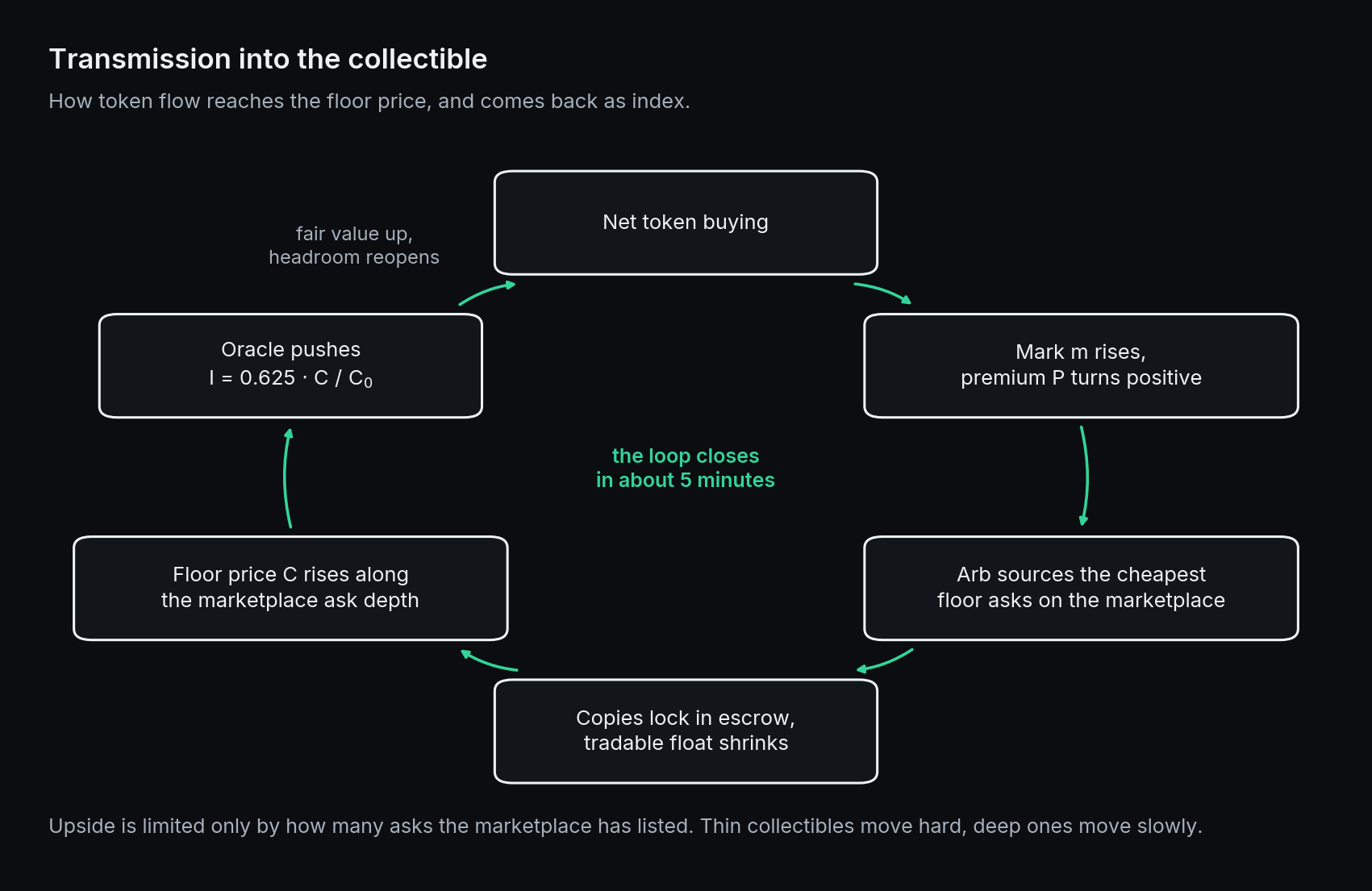
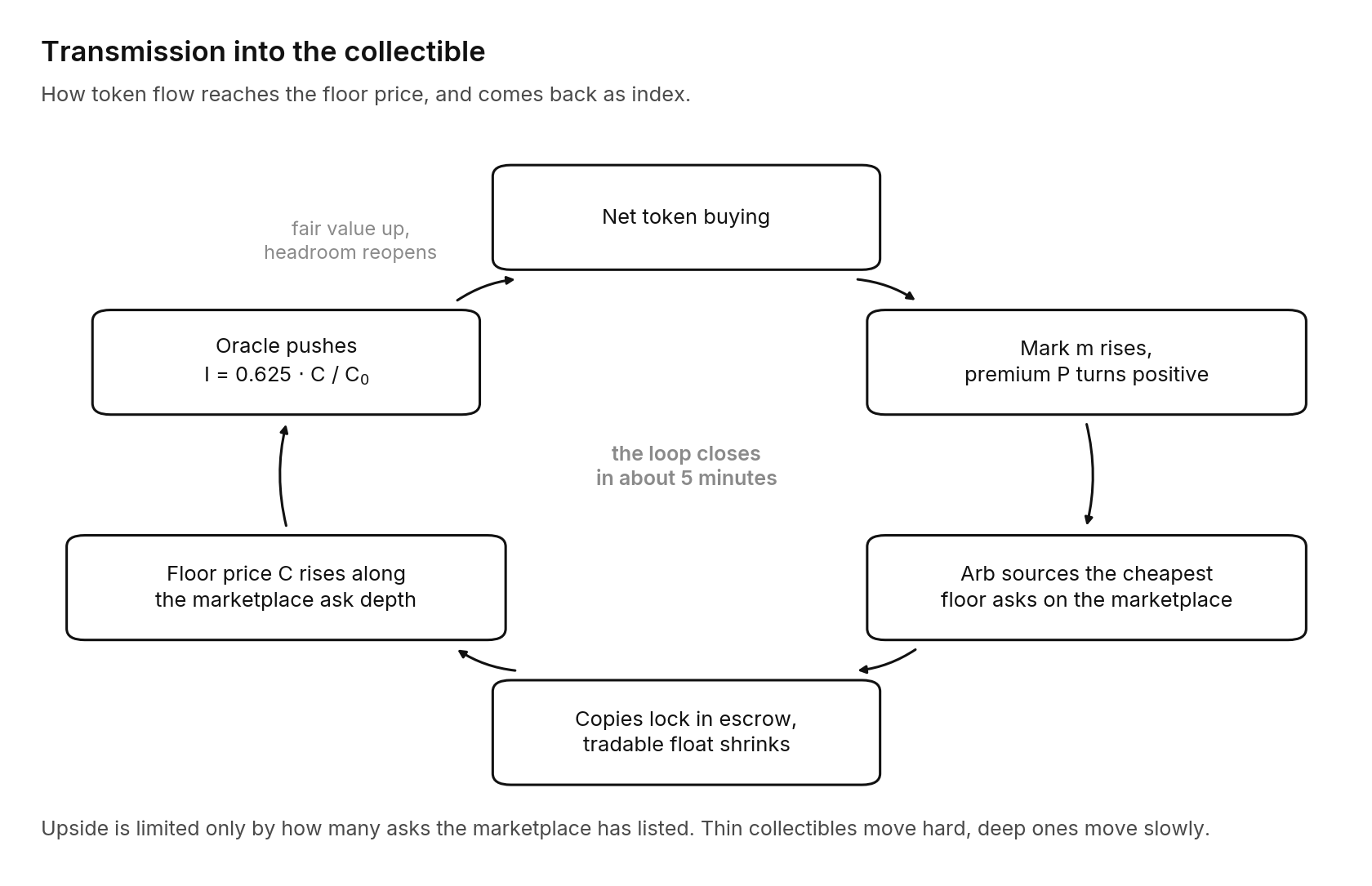
The transmission loop: token buying ends up consuming the collectible's floor asks, and the higher floor comes back as index.
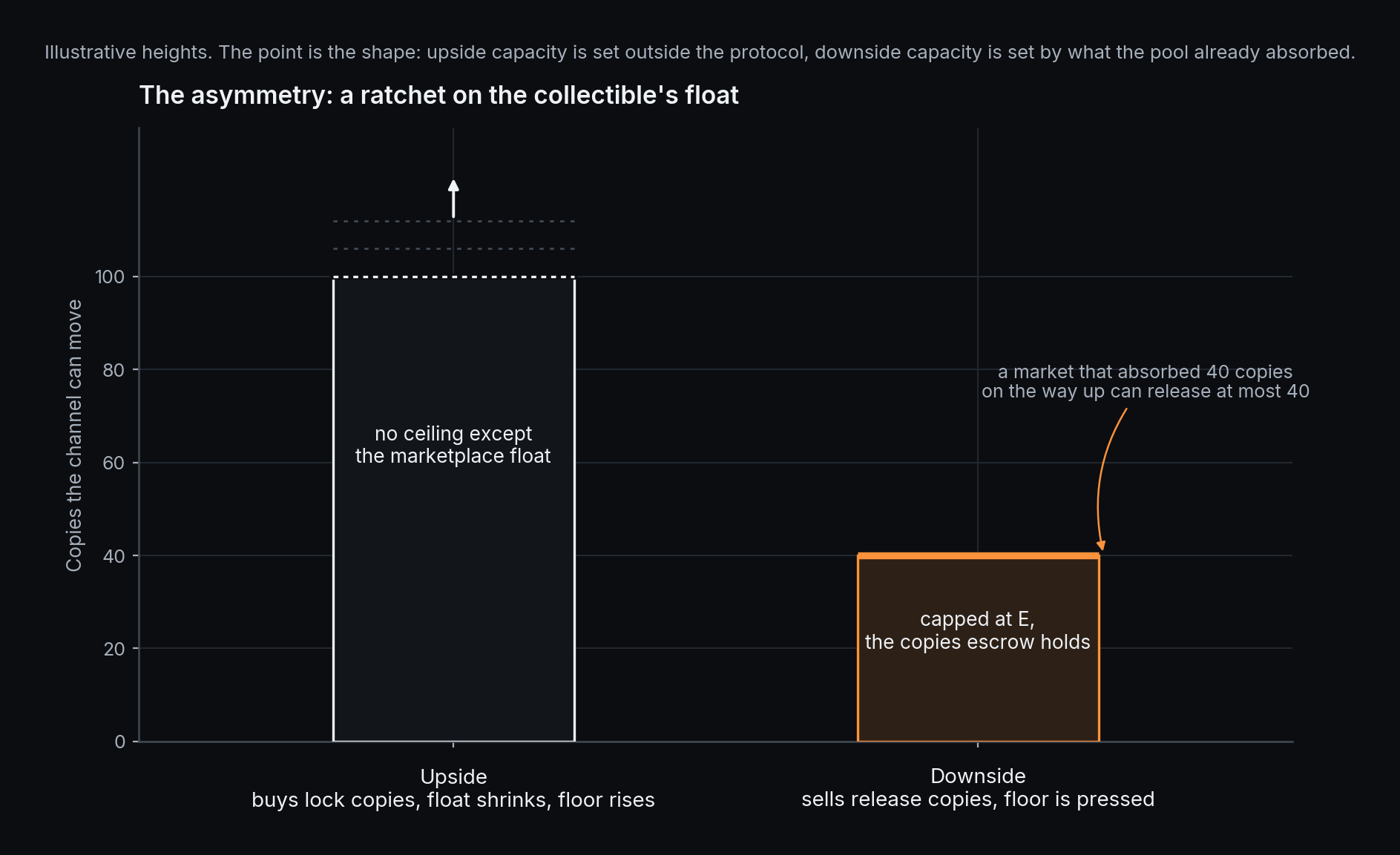
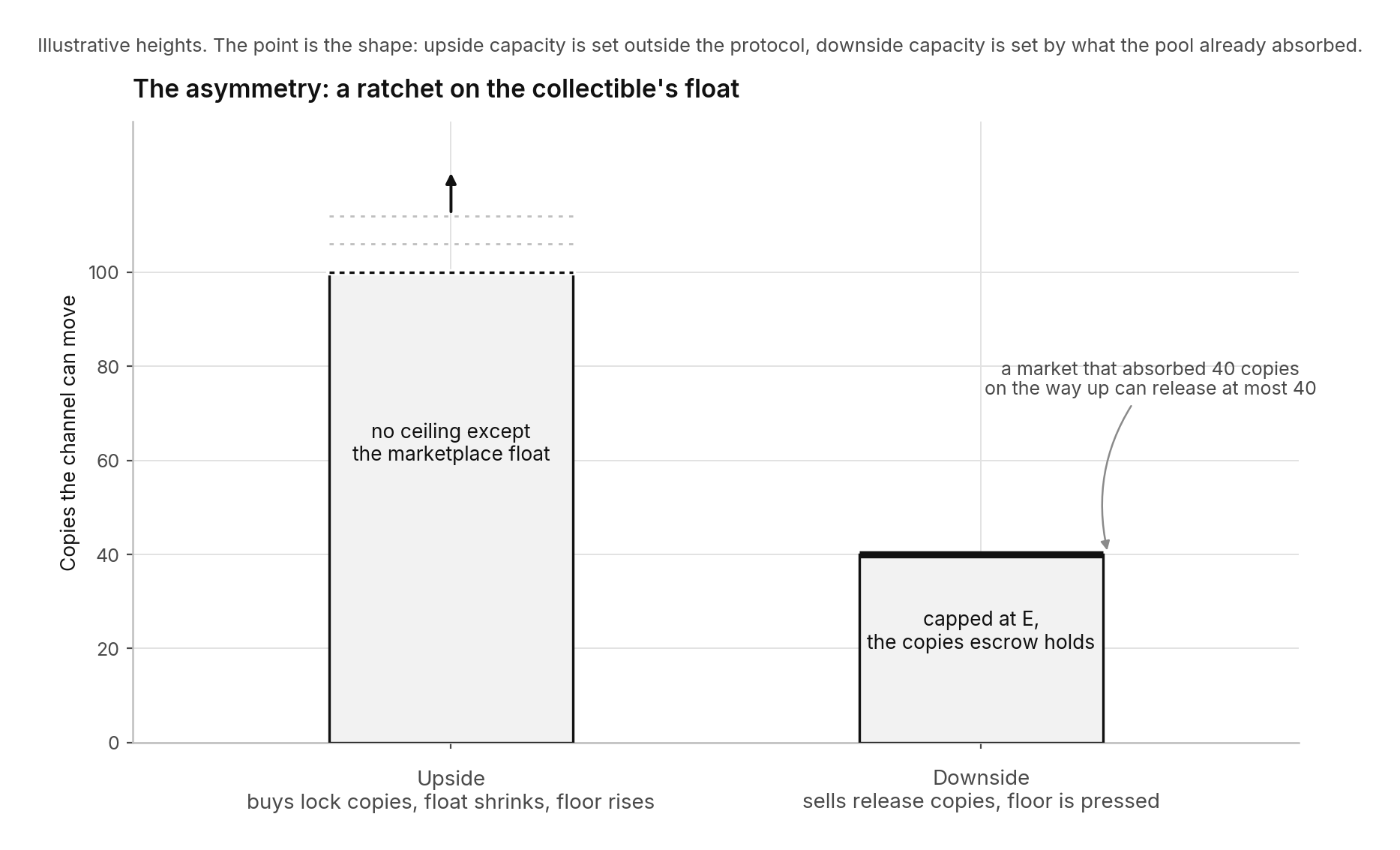
The asymmetry: upside transmission is bounded by marketplace float, downside is hard-capped by escrow inventory.
Who earns what
The fee receiver can be an identity (an X account, a YouTube channel, a forum figure), which means a community can launch a market and route half its volume fees to the person who actually built that collectible’s community: without asking them first.
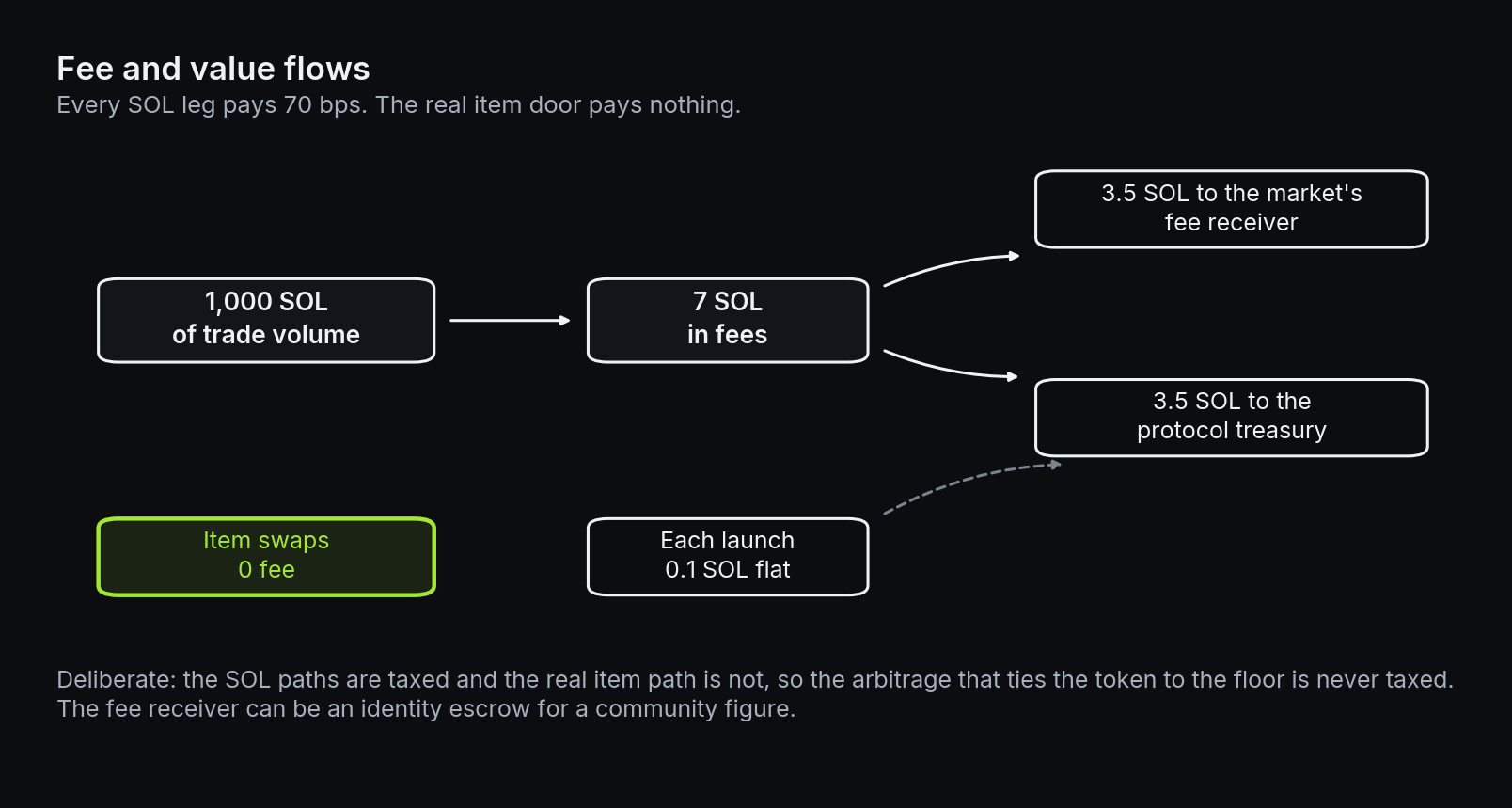
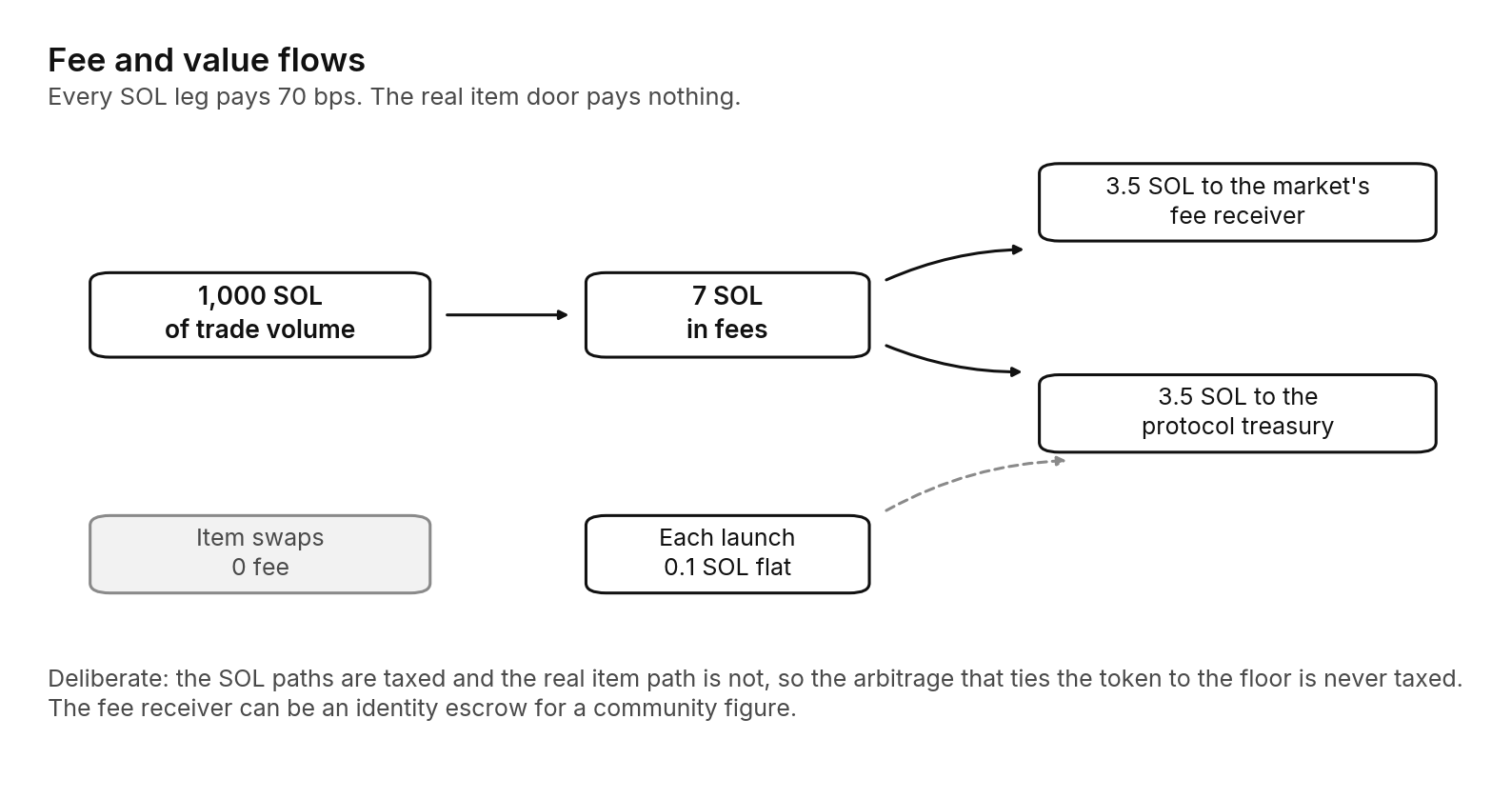
Where every fee goes; item swaps pay none.