

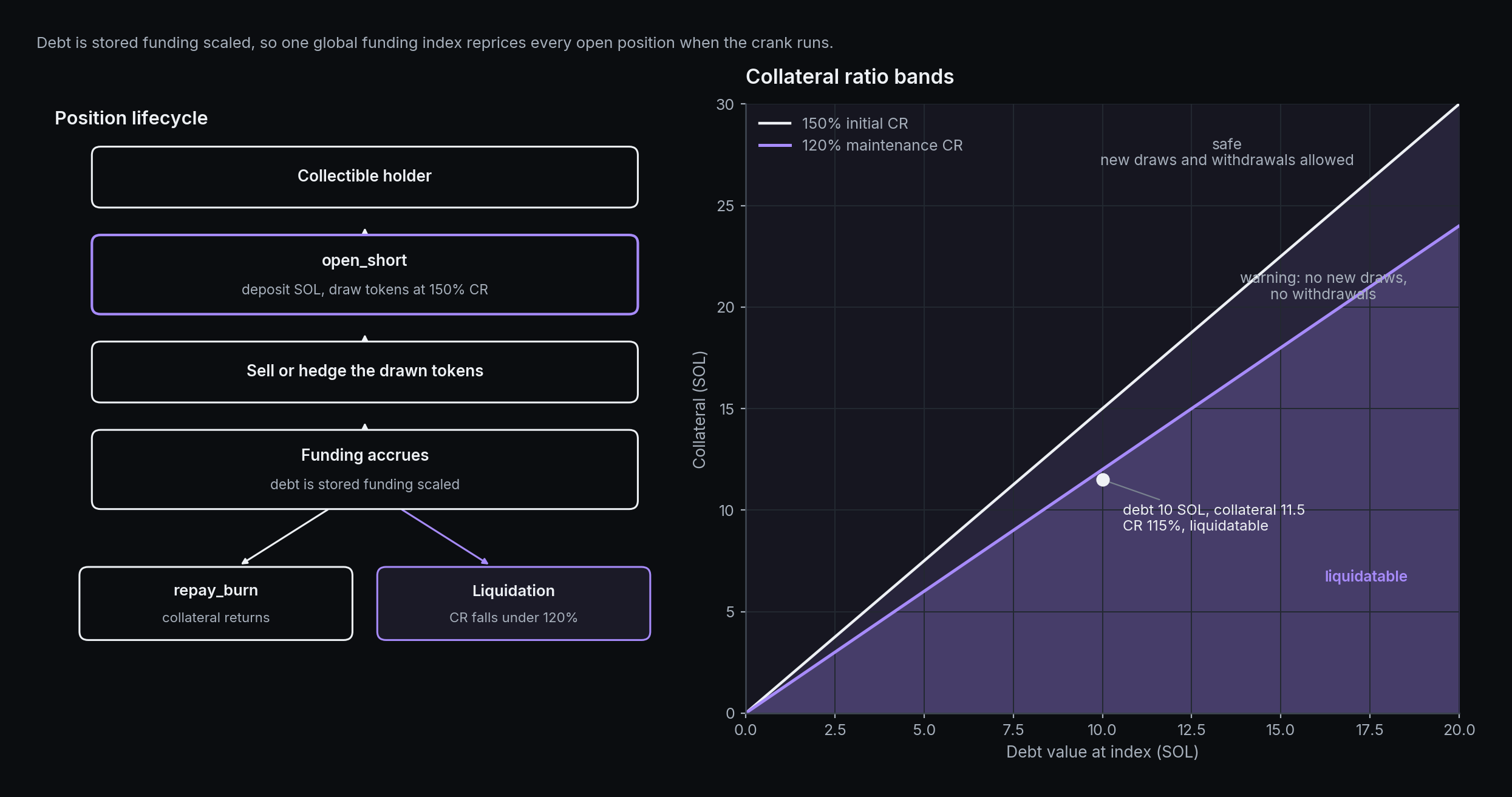
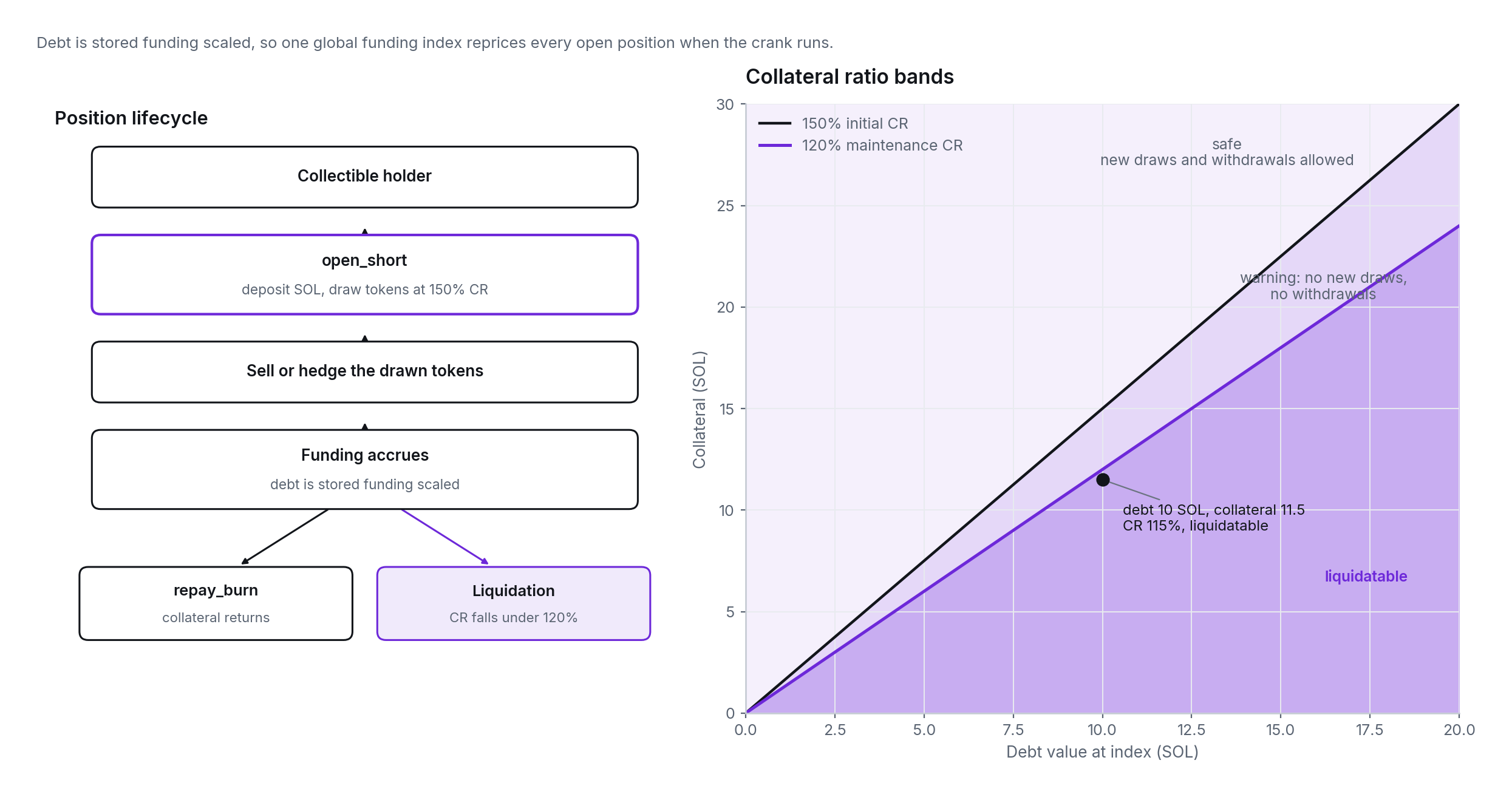
The CDP short lifecycle with its collateral-ratio bands.
Who shorts, and why
- Holders of the underlying hedging downside. A collector holding the physical card or the NFT can draw synth against SOL collateral and sell it, locking in exposure to the current price without selling the asset itself. No sale means no tax event, no loss of the collectible, no exit from the community. This is the structural short supply the market is designed around.
- Basis traders. When the mark trades below the index, funding pays whoever is willing to be short the gap. Traders open shorts to collect that flow and close when the basis normalizes.
Opening a position
open_short(collateral, mint_amount) transfers collateral lamports into the market vault and transfers mint_amount synth (base units) from the treasury reserve to your wallet. The position must satisfy the initial collateral ratio:
initial_cr_bps = 15000, drawing synth worth 10 SOL at the index requires at least 15 SOL of collateral.
Each wallet has exactly one position per market, stored at a program-derived address with seeds ["short", market, owner]. Calling open_short again adds to the existing position; the combined position must still meet the initial CR.
Opens are bounded twice: by the configured hedge-reserve size (
max_open_interest, failing with OpenInterestCapReached) and by the reserve’s actual balance in the treasury (failing with TreasuryDepleted). On the internal venue the reserve is preminted to exactly max_open_interest, so the two coincide at creation; the physical reserve is the binding ceiling. When the reserve is empty, the hedging facility is simply full. See Parameters.Managing a position
Withdrawals are held to the initial CR, not the maintenance CR, so you cannot withdraw yourself to the edge of liquidation.
Debt is funding-scaled
Positions do not store a raw debt number. They store a scaled value so that funding applies to every position continuously without per-position writes:funding_index falls (mark above index, shorts being paid), every position’s current debt shrinks. When it rises, every position’s debt grows. Your wallet’s synth balance does not change; what changes is how much you must return to the reserve to fully repay.
Risk summary
- If the index rises, your debt value rises and your CR falls. Below
maintenance_cr_bpsyour position can be liquidated by anyone. See Liquidations. - Funding can work for or against you depending on where the mark sits relative to the index.
- A circuit breaker freeze pauses withdrawals and liquidations, but you can always add collateral while frozen.
- Opening, withdrawing against debt, and being liquidated all require a fresh index: if the oracle has not pushed within
max_index_age_secs, these returnIndexStaleuntil the feed resumes. See the staleness guard. Repaying and adding collateral still work while stale.